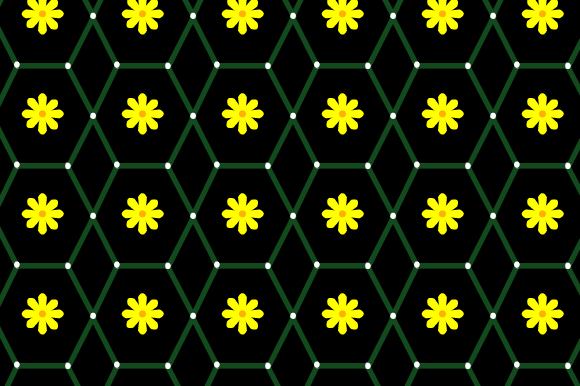
Understanding Simple Smooth Patterns: Your Guide to EPS and PNG File Downloads
Patterns are everywhere. From the tiles on your kitchen floor to the background of your favorite website, patterns bring rhythm, order, and beauty to the visual world. Among the many types of patterns, the simple smooth pattern has become a favorite for designers, hobbyists, and businesses alike. Its clean lines, gentle transitions, and versatile nature make it a go-to choice for projects that need a polished yet subtle touch.
But what exactly is a simple smooth pattern, and why do so many digital creators rely on EPS files and PNG files to download and use them? In this article, we'll explore the concept from the ground up, look at its purpose and relevance, and walk through everything you need to know about downloading and working with these files. Whether you're a complete beginner or someone with design experience, you'll find practical insights that help you use simple smooth patterns with confidence.
What Is a Simple Smooth Pattern?
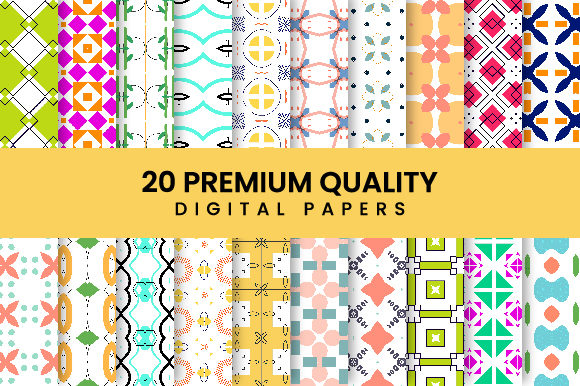
A simple smooth pattern is a repeating design element that relies on clean, uninterrupted lines and gentle curves rather than sharp angles or complex textures. The "smooth" quality refers to the absence of harsh transitions — colors or shapes flow into one another seamlessly, often creating a calming or elegant effect. "Simple" means the pattern avoids excessive detail; it might consist of basic geometric shapes, flowing waves, dotted grids, or soft organic motifs repeated at regular intervals.
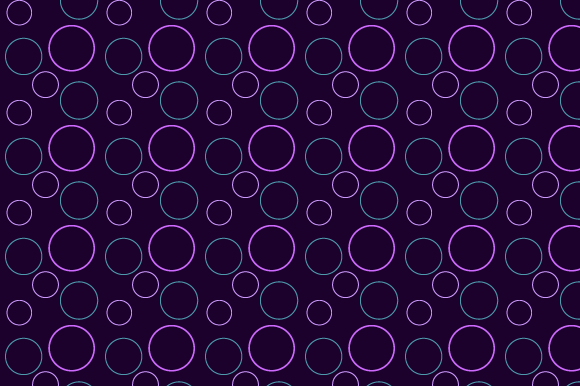
Think of a wallpaper with subtle, rounded circles that repeat across the surface, or a fabric with a gentle undulating line that never breaks. That's the essence of a simple smooth pattern. It doesn't scream for attention; instead, it provides a pleasing background that supports other design elements.
Why Smoothness Matters in Design
Smooth patterns feel natural to the eye. Our brains are wired to respond positively to fluid, continuous forms — they remind us of water, wind, and organic growth. In user interfaces, smooth patterns reduce cognitive load, making a page feel more comfortable to look at for longer periods. In branding, they convey professionalism, calm, and reliability. For print projects like wrapping paper or business cards, smooth patterns add a tactile sense of quality without overwhelming the main content.
The Purpose and Significance of Simple Smooth Patterns
Simple smooth patterns serve multiple roles across different fields:
- Web and app design: They create visually pleasing backgrounds that don't distract from text or buttons.
- Print and packaging: They add subtle texture to brochures, gift wraps, and labels.
- Textile and fashion: They form the basis for clothing prints, scarves, and upholstery.
- Brand identity: They can become a signature element that makes a brand instantly recognizable.
- Digital art and illustration: They provide a foundation for more complex compositions.
In modern life, patterns influence how we perceive products and spaces. A smooth, simple pattern on a website's hero section can make the difference between a visitor staying or leaving. In education, teachers use patterns in worksheets and presentations to create structure without clutter. In daily activities — from journaling to home decorating — people choose patterns that feel harmonious and restful.
Download Details: EPS and PNG Files Explained
When you find a simple smooth pattern you love, you'll typically have the option to download it in one (or both) of two common file formats: EPS and PNG. Understanding the difference between them is crucial for getting the best results in your project.
What Is an EPS File?
EPS stands for Encapsulated PostScript. It's a vector file format, which means it stores image data as mathematical equations rather than pixels. This gives it a remarkable property: an EPS file can be scaled to any size — from a postage stamp to a billboard — without losing any quality. The edges remain crystal clear, and the smooth curves stay perfectly smooth.
EPS files are widely used in professional design environments. They are compatible with software like Adobe Illustrator, CorelDRAW, Affinity Designer, and many others. If you're working on a logo, a large banner, or any project where you need to resize the pattern repeatedly, an EPS file is your best friend.
Key Advantages of EPS for Simple Smooth Patterns
- Infinite scalability — never worry about pixelation.
- Editable elements — you can change colors, shapes, or spacing in vector software.
- Small file size for the level of detail they contain.
- Professional standard — widely accepted by printers and designers.
What Is a PNG File?
PNG stands for Portable Network Graphics. It is a raster file format, meaning it is made up of a fixed grid of pixels. PNGs are known for supporting transparency — parts of the image can be fully or partially see-through, which is extremely useful when layering a pattern over a background color or photograph.
Unlike JPEGs, PNGs use lossless compression, so the image quality doesn't degrade when you save and resave the file. However, because they are pixel-based, they have a fixed resolution. Enlarge a PNG beyond its original dimensions, and it will become blurry or blocky. For this reason, PNGs are ideal for screen use — websites, social media graphics, presentations, and digital documents — where the pattern will be displayed at a consistent size.
Key Advantages of PNG for Simple Smooth Patterns
- Transparency support — place the pattern over any background seamlessly.
- Wide compatibility — every browser, image viewer, and basic editor can open PNGs.
- Lossless quality — no compression artifacts.
- Easy to use — no special software required to view or insert into documents.
EPS vs. PNG: Which One Should You Download?
Choosing between EPS and PNG depends entirely on what you plan to do with the simple smooth pattern. Here's a practical guide:
| Use Case | Recommended Format |
|---|---|
| Printing a large poster or banner | EPS (scalable without quality loss) |
| Using the pattern on a website | PNG (fast loading, transparent background) |
| Editing colors or shapes | EPS (vector editing capabilities) |
| Inserting into a Word document or Google Slides | PNG (universal compatibility) |
| Creating a fabric print | EPS (printer-friendly vector format) |
| Sharing on social media | PNG (small file, instant preview) |
Many download sites offer both formats, giving you the flexibility to use the pattern in multiple contexts. If you're unsure, it's often safest to download the EPS for future editing and the PNG for immediate use.
How to Download Simple Smooth Patterns: Step-by-Step
Downloading a simple smooth pattern is usually straightforward, but a few tips can help you avoid common pitfalls:
- Choose a reputable source. Look for websites that clearly state the file format, resolution (for PNG), and license terms. Free resources like pattern libraries and premium marketplaces both offer high-quality options.
- Check the license. Some patterns are for personal use only; others allow commercial use. Always read the terms before using a pattern in a product you plan to sell.
- Select the right format. Click the EPS or PNG download button based on your project needs as described above.
- Save to an organized folder. Keep your pattern files in a dedicated directory with clear names (e.g., "smooth_circles_blue_eps.eps" and "smooth_circles_blue_transparent.png").
- Test the file. Open it in your chosen software to ensure it looks correct and the colors match your expectations.
Common Misunderstandings About Simple Smooth Patterns
Even experienced users sometimes carry misconceptions about patterns and file formats. Let's clear up a few:
- "Simple means low quality." Not at all. Simplicity in pattern design is a deliberate aesthetic choice. A simple smooth pattern can be more sophisticated and versatile than a busy, complex one.
- "EPS files are only for professionals." While EPS files are used by professionals, they can be opened and edited with free vector software like Inkscape. You don't need an expensive subscription to benefit from vector patterns.
- "PNG is always inferior to EPS." Each format has strengths. For digital use, PNG is often superior because of its transparency, universal support, and efficient rendering in browsers.
- "All patterns tile perfectly." A well-made pattern should tile seamlessly, but not every download is tested. Always preview the pattern at a larger size to check for visible seams.
Practical Relevance in Modern Life
Simple smooth patterns have found their way into nearly every corner of contemporary life:
- Remote work and virtual meetings: Smooth patterns serve as calm virtual backgrounds on Zoom or Teams, helping professionals maintain a polished appearance without distraction.
- E-commerce and product photography: Patterns are used as backdrops that make products stand out without competing for attention.
- Digital planning and bullet journals: Planners use smooth patterns to decorate pages, create habit trackers, or add visual interest to notes.
- DIY and crafting: Home crafters download PNG patterns to print on transfer paper for mugs, t-shirts, and tote bags.
- Educational materials: Teachers and students use patterns in slides, posters, and worksheets to create a cohesive visual theme.
How Simple Smooth Patterns Fit into Creativity and Technology
Technology has made it easier than ever to create, share, and customize patterns. With a few clicks, you can download a simple smooth pattern in EPS or PNG format and adapt it to your specific color palette or scale. Design software now includes tools that let you preview patterns in real time, making the creative process fluid and intuitive.
For businesses, patterns are a low-cost way to elevate branding. A consistent pattern used across a website, business cards, and packaging builds recognition and trust. For educators, patterns help structure information visually, aiding comprehension. For hobbyists, they open up endless possibilities for personal projects without requiring advanced design skills.
Final Thoughts: Choosing the Right Pattern and File for You
Simple smooth patterns offer a perfect balance of elegance and utility. Whether you're designing a website, creating a presentation, or embellishing a handmade gift, understanding the nature of these patterns and the file formats they come in empowers you to make better creative decisions.
Remember these key takeaways:
- A simple smooth pattern is defined by clean, flowing repetition that feels calming and professional.
- EPS files are vector-based and infinitely scalable — ideal for printing and editing.
- PNG files are raster-based with transparency — perfect for digital use and quick placement.
- Always choose the format that matches your project's intended use and output medium.
- Download from trusted sources and respect license terms to avoid issues later.
With this knowledge, you're ready to explore the world of simple smooth patterns with clarity. Whether you download an EPS to create a custom brand wallpaper or a PNG to brighten up your social media posts, you now have a solid foundation to work from. Enjoy the process, and let the smooth lines guide your creativity.