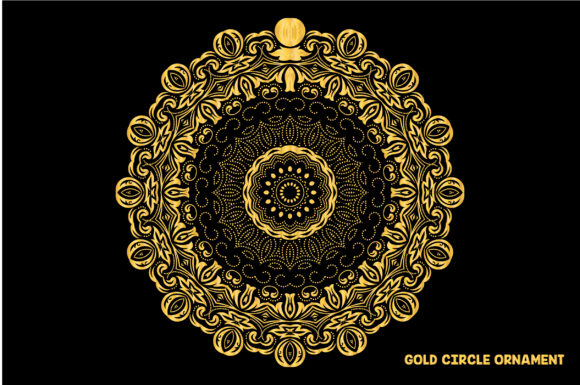
Circle Ornaments and Mandala Colors: A Versatile Design Resource for Geometric and Decorative Art
Designers and visual artists often look for reliable, adaptable graphic elements that can serve multiple purposes across different projects. Circle ornaments and mandala colors represent a specific category of decorative graphics that combine geometric precision with ornamental complexity. When packaged as a downloadable set with multiple file formats, this type of resource becomes a practical tool for both professional and amateur creators. Understanding what these graphics offer, how they work in different settings, and when they might or might not suit a project can help you make an informed choice before integrating them into your work.
What Circle Ornaments and Mandala Colors Provides
At its core, this resource is a collection of circular ornamental patterns and mandala-inspired designs rendered in color. The patterns typically feature concentric rings, repeating geometric motifs, and symmetrical arrangements that radiate from a central point. Mandala designs draw from a long tradition of decorative art found in various cultures, while circle ornaments lean toward more abstract or modern geometric styling. Together, they form a set of visuals that can be used as standalone elements or as repeating patterns for backgrounds, wallpapers, and other surface designs.
The package includes five file formats: AI (Adobe Illustrator), EPS, JPG, PNG, and SVG. This variety ensures that whether you work in vector editing software, raster image editors, or web development tools, you have a format that fits your workflow. AI and EPS files preserve the editable vector structure, while SVG provides a web-friendly vector format. JPG and PNG give you ready-to-use raster versions for quick placement or for use in software that does not support vector files.
Why Designers and Artists Might Consider This Resource
One of the primary reasons someone might look into circle ornaments and mandala colors is the need for high-quality decorative elements that save time. Creating intricate mandala patterns from scratch requires considerable skill, patience, and attention to symmetry. A pre-made set eliminates that upfront effort and allows you to focus on composition, color integration, and overall project goals.
Another reason is versatility. Because these designs are abstract and geometric, they can fit into many visual styles: bohemian, spiritual, modern, minimalist, ornate, or even corporate, depending on how they are used and paired with other elements. The circular format works well for logos, badges, medallions, and icons, while the pattern potential suits background textiles, packaging, and digital wallpapers.
Additionally, the multiple file formats mean the same design can move from a printed brochure to a website to a social media graphic without rework. Vector formats allow infinite scaling without loss of quality, so a small icon can become a large wall mural without pixelation.
Benefits of Using This Type of Design Resource
The most immediate benefit is convenience. Having five file formats bundled together means you do not need to convert or export files yourself. Whether you use Adobe Creative Suite, Affinity, Inkscape, Canva, or a web development tool, you likely have a compatible format ready to use.
Another benefit is the visual impact of mandala and circle ornament designs. Their symmetry and repetition naturally draw the eye, making them effective for focal points, framing devices, or full backgrounds that add texture without overwhelming the viewer. When used well, they can communicate order, balance, and aesthetic care.
Color is another advantage. The "mandala colors" aspect implies that the designs come in coordinated palettes, which can save you from guessing or testing color combinations. If the colors align with your project's scheme, you can drop the elements in with minimal adjustment. If they do not, vector formats make recoloring straightforward.
Scalability and resolution independence matter for anyone producing work for multiple media. A single SVG or AI file can be printed at business card size or billboard size, while the PNG and JPG versions give you a high-resolution starting point for digital use.
Tradeoffs and Practical Considerations
While the convenience is real, there are tradeoffs to consider. Pre-made patterns may lack the uniqueness of a custom design. If you are working on a brand identity or a project that demands original artwork, using a stock set of ornaments might feel generic or overused, especially if the same patterns appear in other projects elsewhere. This is not necessarily a problem for internal projects, social media templates, or personal work, but it is something to weigh for client-facing or public-facing design.
Another consideration is color flexibility. While the provided colors may be appealing, they might not match your specific palette. If the designs are not easily editable, adjusting colors could take time. The AI and EPS files should allow color changes, but the JPG and PNG are rasterized and cannot be recolored without significant effort. That means if you intend to rely heavily on the raster versions, you are committing to the existing color choices.
File size and complexity can also vary. Intricate mandala patterns with many nodes and paths can make vector files large and slow to load in some software. If you are working on a low-powered computer or in a browser-based tool, you might experience lag. Similarly, high-resolution JPG and PNG files take up disk space and memory.
Licensing is another practical point. Before using any downloaded design resource, confirm what the license allows. Some sets restrict commercial use, require attribution, or limit the number of copies you can produce. Even if the listing implies broad use, check the terms to avoid issues later.
Where This Resource Is a Strong Fit
Circle ornaments and mandala colors work well in several common scenarios. For background designs in print or digital media, they add structure and elegance without requiring custom illustration. Geometric wallpaper art, textile patterns, and surface designs benefit from the repeating, radial symmetry. Web designers can use the SVG format for responsive backgrounds that scale naturally across screen sizes.
Event materials, such as wedding invitations, meditation workshop flyers, or festival branding, often incorporate mandala motifs to evoke harmony and spirituality. The colorful versions can reinforce a theme or mood. Similarly, product packaging for wellness, beauty, or artisanal goods can use these ornaments to communicate care and aesthetic attention.
Social media templates, YouTube thumbnails, and presentation slides also benefit from decorative borders or background elements that are visually interesting but non-distracting. The PNG version can be layered easily in apps like Canva or Photoshop without dealing with vector software.
For educators and students learning design, having a ready-made set of mandala patterns allows them to practice composition, color theory, and layout without spending hours drawing the base elements. It becomes a teaching tool as much as a production resource.
When Alternatives May Be Worth Considering
If originality and exclusivity are high priorities, commissioning a custom mandala design or creating one from scratch may be a better path. Stock ornaments, even when well-made, carry the risk of appearing in other projects. For brands that depend on visual distinctiveness, custom work is often worth the extra time and cost.
If your project requires a specific color palette that does not match the provided colors, and if you are not comfortable editing vector files, this set may require more work than it saves. In that case, a monochrome or black-and-white mandala set that you can overlay with your own colors might be more flexible, or you could invest in learning to edit the AI or EPS files.
For projects that need very large or highly detailed backgrounds, generating a pattern via a tiling tool or a procedural generator could give you more control over scale, density, and repetition. A fixed set of patterns cannot offer the infinite variation that a parametric tool can. This matters if you are creating a full wall mural, a repeating fabric pattern, or a site background where any visible repeat could break the illusion.
If you work exclusively in raster-based software and do not plan to use vector formats, the inclusion of AI, EPS, and SVG files may not offer you additional value over a set that provides high-resolution PNGs alone. Conversely, if you work only in vector software, the JPG and PNG files might be redundant. Evaluating which formats you actually need can help you decide whether this multi-format bundle is cost-effective for you.
Practical Decision-Making Insights
To determine whether circle ornaments and mandala colors align with your needs, start by identifying your primary use case. If you need decorative backgrounds, accent elements, or pattern starters, this resource likely saves you significant time. If you need unique brand assets or highly specific color integration, you may need to budget for custom work or additional editing time.
Consider your software environment. If you use Adobe Illustrator, Inkscape, Affinity Designer, or a similar vector editor, the AI and EPS files are ideal. If you work mostly in layout tools like InDesign, or in web development, SVG and PNG will be most useful. Make sure the formats you rely on most are included and work smoothly with your version of the software.
Check the license terms before purchasing or downloading. Even if the listing uses permissive language, confirm that commercial use, modification, and redistribution are allowed for your specific context. This is especially important if you are creating products for sale or use by clients.
Think about the visual style of your project. If the mandala patterns lean heavily toward a specific cultural or spiritual aesthetic, consider whether that aligns with your audience and message. While mandala-inspired designs are widely appreciated, they carry associations that may not suit every brand or project. Circle ornaments with a more abstract geometric style may be more neutral and broadly applicable.
Finally, evaluate whether you have the skills and time to customize the files if needed. The vector formats give you that flexibility, but only if you are comfortable editing paths, adjusting colors, and reorganizing layers. If you are not, the JPG and PNG versions become your primary options, and you will be working with the designs as-is.
Making the Right Choice for Your Project
Circle ornaments and mandala colors as a bundled design resource offer a practical starting point for many types of visual work. The combination of multiple file formats, ornamental structure, and ready-to-use color makes them attractive for designers who want efficiency without sacrificing visual quality. They are especially effective for background designs, geometric wallpapers, and decorative elements in both print and digital media.
At the same time, the limitations around originality, color fit, and customization potential are real. For projects where exclusivity, precise color matching, or infinite variation matter, alternative approaches such as custom illustration, procedural pattern generation, or a monochrome set may serve you better. Understanding the tradeoffs helps you choose based on your actual workflow, not just on the appeal of the designs.
By matching the resource to your specific context, software, output goals, and creative requirements, you can decide whether this set of circle ornaments and mandala patterns is a useful addition to your design toolkit or whether a different solution better fits your needs.