Oriental Style of Pattern Seamless: Geometric Trellis and Diagonal Square Design in Monochrome
Decoding the Visual Language of the Diagonal Square Trellis
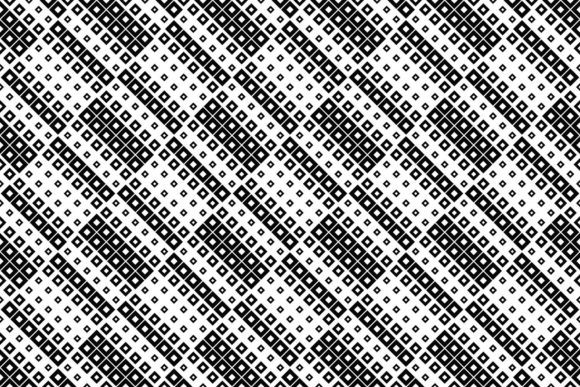
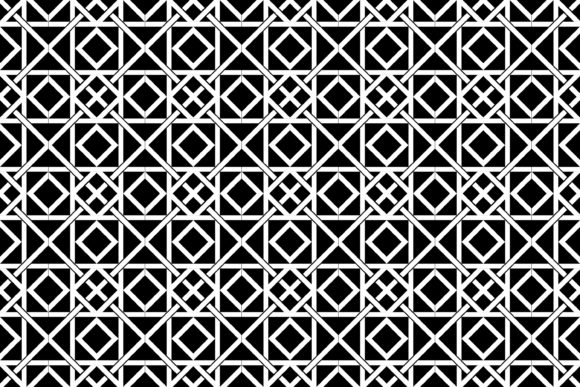
The Oriental Style of Pattern Seamless approach, particularly when executed as a geometric trellis of diagonal squares on a stark white-on-black background, represents a sophisticated intersection of tradition and contemporary minimalism. At first glance, the pattern appears to be a straightforward repetition of diamond-like forms, but closer inspection reveals a layered complexity. The diagonal orientation of the squares breaks away from the static grid, introducing a sense of movement and rhythm. This dynamic quality is what makes the design so effective across various mediums—whether it is rendered as a subtle texture or a bold ornamental statement.
In this monochrome configuration, the contrast is absolute. The black background serves as an infinite void, while the white diagonal squares emerge with precision and clarity. This is not merely a decorative choice; it is a deliberate visual strategy. The Oriental Style of Pattern Seamless tradition often relies on the interplay between negative and positive space, and here, the white lines and squares carve out a geometry that feels both ancient and futuristic. The hipster aesthetic, with its appreciation for the handcrafted and the retro, finds a natural ally in this pattern. It evokes the look of traditional Asian latticework, yet it is stripped down to its purest geometric essence, making it relevant for modern design sensibilities.
Core Characteristics of the Monochrome Geometric Trellis
- Precision and Repetition: The seamless nature of the pattern ensures that the diagonal squares align perfectly across any surface. There are no breaks, no awkward joins—only an infinite flow of geometry. This precision is critical for applications like wallpaper and textile printing, where consistency defines quality.
- Dual-Tone Contrast: The white-on-black palette is not accidental. It maximizes visual impact while remaining adaptable. The high contrast creates depth, making the pattern appear to recede or advance depending on the viewing angle. This optical effect is a hallmark of sophisticated pattern design.
- Cultural Echoes: The diagonal trellis motif has deep roots in East Asian art, particularly in traditional Japanese and Chinese lattice designs. However, the Oriental Style of Pattern Seamless treatment here is not a literal copy—it is a reinterpretation. The white lines suggest the wooden lattices of shoji screens or the intricate masonry of ancient walls, but the minimalism of the execution gives it a contemporary, almost industrial feel.
- Scalability: Whether the squares are rendered at a tiny scale for a delicate texture or at a large scale for a bold graphic statement, the pattern retains its integrity. This scalability is a practical advantage for designers who need to adapt a single motif across multiple product lines.
Why the Hipster Monochrome Aesthetic Resonates
The hipster subculture has long championed the revival of vintage and culturally significant motifs, but with a twist. The monochrome diagonal square trellis fits perfectly into this ethos. It is nostalgic without being dated, and it is exotic without being appropriative. The Oriental Style of Pattern Seamless design, when executed in strict black and white, becomes a visual chameleon. It can complement a mid-century modern interior, a brutalist architectural detail, or a minimalist fashion collection.
The appeal also lies in its restraint. In an age of digital overload, a pattern that relies on pure geometry and monochrome contrast offers a sense of calm and order. The diagonal orientation adds just enough energy to prevent the design from feeling sterile. This balance is what makes the pattern popular among creators who want to add visual interest without overwhelming their audience. It is a backdrop that does not compete—it frames.
Textile and Fashion Design
In the world of fashion, the Oriental Style of Pattern Seamless geometric trellis is a versatile tool. Imagine a lightweight silk scarf where the white diagonal squares float against a black field, creating an accessory that is both bold and elegant. For menswear, the pattern can be used as a subtle all-over print on shirting or as a lining material that reveals itself only when the garment moves. The monochrome palette ensures that the pattern does not clash with other elements in an outfit. Fashion designers appreciate the pattern's ability to add structure and rhythm to flowing fabrics. The texture created by the diagonal lines can also mimic the look of woven materials, adding a tactile dimension to digital prints.
Wallpaper and Interior Backdrops
Interior designers are increasingly turning to monochrome geometric patterns to create feature walls that are dramatic yet sophisticated. A wallpaper featuring the Oriental Style of Pattern Seamless diagonal trellis can transform a room. In a dining area, the white-on-black geometry adds a formal, almost architectural quality. In a bedroom, it can create a cocooning effect, especially when paired with soft lighting that plays across the diagonal surfaces. The seamless quality is paramount here—any visible joins would break the illusion of an infinite lattice. High-quality digital printing has made it possible to produce this pattern on a variety of wall covering materials, from traditional paper to non-woven substrates.
Wrapping and Packaging
The pattern also excels in the realm of wrapping and packaging. A gift wrapped in paper featuring the diagonal square trellis instantly conveys a sense of thoughtfulness and design awareness. For brands that want to project a minimalist, premium image, this pattern can serve as a signature wrapping material. The monochrome look photographs well, making it ideal for social media sharing. Additionally, the pattern can be used as a background element on product packaging, adding a layer of ornament without increasing printing complexity. Because it is a single-color design, production costs remain manageable, and the visual impact is high.
Digital and Print Illustration Backgrounds
For illustrators and graphic designers, the Oriental Style of Pattern Seamless vector makes an ideal background element. It can be used to anchor a composition, provide texture behind typography, or serve as a standalone ornamental piece. The diagonal grid offers a subtle way to guide the viewer's eye across a layout. In web design, these patterns can be used as hero section backgrounds or as repeating textures in app interfaces. Because the pattern is vector-based, it remains crisp at any resolution, which is a critical advantage in responsive design.
Technical Considerations for Production
When working with an Oriental Style of Pattern Seamless geometric trellis vector, there are several practical factors to keep in mind. First, the precision of the repeat is everything. A poorly constructed seamless pattern will show visible seams, especially when applied over large areas. Designers should verify that the diagonal squares align perfectly at all edges. This is where professional vector tools are essential—the pattern must be tested at multiple scales before final production.
Second, the line weight of the white squares or lines must be carefully calibrated. If the lines are too thin, they may disappear when printed on certain materials, especially dark fabrics. If they are too thick, the pattern can become visually heavy and lose its delicate quality. For textile applications, a mid-range line weight that holds up under washing and wear is recommended. For wallpaper and digital use, finer lines can be used to maximize the intricate feel.
Another consideration is the substrate. On a glossy surface, the white-on-black contrast will be sharp and reflective. On a matte surface, the pattern will appear softer and more integrated. Designers should request physical samples when possible, as screen renders can be misleading. The same pattern can look completely different on cotton, linen, silk, or paper.
Creative Exploration and Variations
While the classic diagonal square trellis in white on black is a powerful design statement, there are countless ways to evolve the concept. Some designers are experimenting with scaling the pattern—using large diagonal squares on one part of a garment and smaller ones on another. Others are introducing subtle variations in line weight to create a hand-drawn feel. The Oriental Style of Pattern Seamless tradition is not static; it invites reinterpretation.
One emerging trend is the use of distressed or grunge effects over the perfect geometry. This creates a tension between order and chaos, which appeals to the hipster aesthetic. Another variation involves rotating the diagonal grid at different angles within the same composition, creating a fragmented, cubist effect. For those who want to stay true to the monochrome concept but add depth, layering two different scales of the same pattern can produce a moiré effect that is visually arresting.
Understanding the User Base
Professionals and hobbyists alike are drawn to this pattern for different reasons. Graphic designers value the vector format and the ease of application. Interior designers appreciate the versatility and the timeless quality of the monochrome palette. Fashion brands see it as a way to add cultural nuance without being overtly thematic. Educators teaching design principles use this pattern to explain concepts of symmetry, rhythm, and negative space. Researchers studying visual perception find the diagonal square trellis a useful stimulus for experiments on pattern recognition and contrast sensitivity.
Business owners in the home decor and fashion sectors are also taking note. The Oriental Style of Pattern Seamless motif, particularly in monochrome, has proven to be commercially viable. It appeals to a broad demographic—from young urbanites furnishing their first apartments to established collectors looking for statement pieces. The pattern does not age quickly because it is not tied to a specific trend. It is a foundational design element that can be reintroduced season after season with minor variations in scale or texture.
Observing the Pattern in Context
To fully appreciate the impact of this design, one should observe it in a real environment. In a room lit by natural daylight, the white diagonal squares catch the light and create subtle shadows that change throughout the day. On a fabric, the pattern interacts with the drape of the material, shifting as the wearer moves. In a digital interface, the pattern provides a structured background that makes foreground content pop. The Oriental Style of Pattern Seamless design is not just a visual element—it becomes part of the experience.
Consider a scenario where a small café uses this pattern on its menu covers and takeaway cups. The geometric trellis instantly signals a curated aesthetic. Customers photograph their coffee and share it online, effectively becoming brand ambassadors. The pattern, in this context, is not merely decoration—it is a communication tool. It conveys values of precision, creativity, and cultural awareness without a single word.
Final Observations on the Geometric Trellis
The Oriental Style of Pattern Seamless diagonal square trellis in white on black is a design that rewards attention. It is simple enough to be reproduced at scale, yet complex enough to invite endless exploration. For creators, it serves as a reliable foundation. For consumers, it offers a familiar yet intriguing visual experience. For educators and researchers, it provides a clear example of how geometry, culture, and aesthetics intersect.
Whether it is used as a wallpaper backdrop, a textile print, a wrapping paper, or a digital ornament, the pattern holds its own. It does not demand attention—it earns it through precision and balance. In a world filled with fleeting visual noise, the monochrome geometric trellis stands as a testament to the enduring power of a well-made pattern. The diagonal squares march on, infinite and seamless, ready to adapt to whatever surface or context they encounter.