The Butterfly Meadow: A Watercolor World of Vintage Nature Design
There is something quietly magnetic about the way watercolor catches light—how pigment blooms across paper, how edges soften into suggestion, how a single stroke can hold both intention and accident. In an era saturated with hyper-realistic renderings and algorithm-generated imagery, the hand-touched quality of traditional illustration has become a rare and welcome relief. The Butterfly Meadow arrives as a carefully curated collection of watercolor illustrations in an Old School style, built around a timeless subject: butterflies, bumblebees, and the plants that sustain them. But this is not merely a set of pretty pictures. It is a versatile design toolkit that speaks to a broader shift in how creators, entrepreneurs, and businesses approach visual identity, storytelling, and product aesthetics.
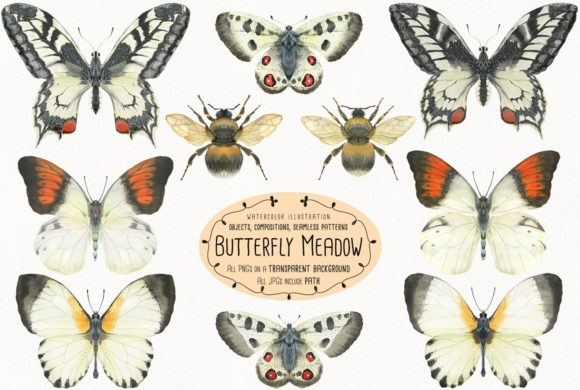
The collection includes objects, compositions, and seamless patterns delivered in a Zip-archive—offering individual PNGs of bumblebees, Apollo butterflies, Appias butterflies, Hebomoia butterflies, Machaon butterflies, and two expansive plant-and-sun illustrations. These elements are available at high resolutions, with transparent backgrounds, and in configurations that suit both standalone use and complex layout work. Square frames, round wreaths, vignette endings, and boutonniere compositions extend the possibilities further, while 24 seamless patterns—half on white backgrounds, half on black—provide repeatable textures for everything from fabric to wallpaper. What makes The Butterfly Meadow particularly compelling is how it bridges the gap between nostalgic charm and practical, high-resolution utility.
Why Old School Watercolor Resonates Now
Trends in design tend to move in cycles, and the current appetite for analog, hand-rendered aesthetics is no accident. After years of flat vectors, minimal icons, and cold precision, many creators and consumers are seeking warmth, texture, and imperfection. Watercolor illustration, especially in the Old School tradition, carries an inherent humanity. The slight unevenness of a brushstroke, the way color pools at a petal's edge, the gentle bleed of pigment into paper grain—these qualities evoke a sense of care and authenticity that digital filters struggle to replicate.
This shift is visible across industries. Packaging for artisanal foods, skincare, and beverages increasingly features hand-painted botanicals. Fashion brands incorporate floral watercolor motifs into scarves, dresses, and loungewear. Home textile collections lean into nature-inspired repeats that feel both timeless and contemporary. Even digital platforms, from blogs to e-commerce sites, use watercolor elements to soften interfaces and add emotional resonance. The Butterfly Meadow taps directly into this movement, offering assets that feel personal rather than mass-produced. For a designer working on a wedding invitation suite, a small-batch honey label, or a magazine feature on pollinator gardens, these illustrations provide a ready-made vocabulary of natural imagery that feels both authentic and elegant.
Beyond aesthetics, there is a deeper cultural thread at play. Environmental awareness has made nature imagery more meaningful. Butterflies and bees are not just decorative motifs; they are symbols of biodiversity, fragility, and ecological interconnection. Using such imagery in design can subtly communicate values of sustainability, mindfulness, and respect for the natural world. The Old School watercolor style reinforces this message by evoking a time when illustration was done by hand, when observation of nature was patient and deliberate. This combination of form and content makes The Butterfly Meadow relevant not just as a design resource, but as a visual statement.
What the Collection Offers: Objects, Compositions, and Patterns
A well-constructed design toolkit does more than provide pretty elements. It anticipates the real-world needs of creators who work under deadlines, across formats, and with varying levels of technical skill. The Butterfly Meadow is organized into three core categories, each designed to reduce friction in the creative process.
Object Elements
The individual elements include multiple versions of key species: bumblebees, Apollo butterflies, Appias butterflies, Hebomoia butterflies, and Machaon butterflies. Each comes as two PNGs with transparent backgrounds, at resolutions ranging from 4500x3500 pixels to 7000x5800 pixels. For editorial illustrators and packaging designers, this level of detail matters. A Machaon butterfly at 7000x5800 pixels can be scaled for use on a poster, a fabric print, or a book cover without loss of quality. The transparent backgrounds allow for seamless compositing into existing layouts, while the watercolor texture ensures that even isolated objects retain a sense of depth and life.
The collection also includes two large plant-and-sun illustrations: one at 10,000x7000 pixels with all elements on a single layer, and a second at 8000x7000 pixels that distorts the plants into round compositions suitable for wreaths and rondo arrangements. These are particularly useful as central motifs or as framing devices for text. The decision to keep elements on one layer is practical for designers who work in Photoshop or Procreate and prefer to adjust color balance, contrast, or scale without managing complex layer structures.
Compositions
Pre-composed layouts save time and inspire direction. The Butterfly Meadow offers seven square frames, seven round wreaths, seven vignette endings, and seven boutonniere compositions—all at 6000x6000 pixels or appropriate aspect ratios, with transparent backgrounds. These compositions are not simply arrangements of the object elements; they are thoughtfully balanced groupings that can be used as standalone decorations or integrated into larger designs.
Square frames work well for social media graphics, product labels, and gift wrap centers. Round wreaths are ideal for logos, monograms, and circular packaging. Vignette endings, at 6000x3000 pixels, are sized for book chapter openers, magazine page tails, or website footers. Boutonniere compositions, at 3000x3000 pixels, offer smaller, concentrated floral arrangements perfect for accent details—think gift tags, stationery corners, or event menus. For an event planner designing materials for a garden wedding, these compositions reduce the need to build arrangements from scratch while still allowing for customization.
Seamless Patterns
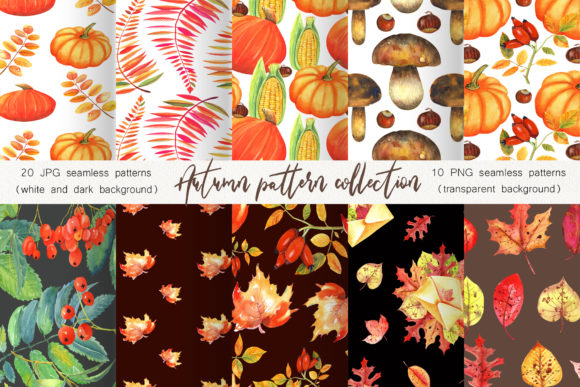
Repeat patterns are where a design collection proves its versatility. The Butterfly Meadow includes 24 seamless patterns in JPG format: 12 on white backgrounds and 12 on black backgrounds, all at 6000x6000 pixels. The path-look panel approach means the patterns are structured for easy tiling, whether you are printing wallpaper, wrapping paper, fabric, or digital backgrounds.
The inclusion of both white and black backgrounds is a thoughtful touch. White-background patterns suit lighter applications—bed linens, summer dresses, or pastel packaging—while black-background patterns offer dramatic contrast for evening wear, dark-themed events, or luxury branding. For a home textiles designer, having both options in one archive means fewer rounds of color adjustment and testing. For a fashion brand exploring a capsule collection, these patterns can be sampled on scarves, shirts, or tote bags with minimal lead time.
It is worth noting that seamless patterns in the old school watercolor style require special care. Watercolor's organic edges and variable opacity can make seamless tiling difficult to achieve without visible seams or loss of flow. The fact that this collection delivers 24 working patterns at high resolution suggests a production process that respects both the medium and the practical demands of repeat design.
Practical Applications Across Industries
One of the strongest arguments for a resource like The Butterfly Meadow is its breadth of use cases. Rather than being locked into a single category, these illustrations serve multiple sectors with distinct needs.
Book and magazine illustration. Editors and art directors looking for chapter openers, sidebars, or decorative headers can pull from the vignette endings and boutonniere compositions. The transparent backgrounds allow for easy placement over text or images, while the old-school watercolor style adds a literary, almost nostalgic quality that suits nature writing, poetry, children's books, and lifestyle magazines.
Packaging design. Small-batch food brands, organic skincare lines, and artisanal candle makers benefit from imagery that communicates natural ingredients and careful production. A bumblebee on a honey jar or an Apollo butterfly on a botanical soap box does more than decorate—it tells a story. The high resolution of the object elements ensures that even large-format packaging, such as gift boxes or display cartons, retains crisp detail.
Fashion and accessories. Print-on-demand services and independent fashion designers can use the seamless patterns for fabric repeats on dresses, scarves, shirts, or face masks. The watercolor aesthetic lends itself to all-over prints that feel painterly rather than graphic. Boutonniere compositions can be adapted for embroidery on jackets or bags, while individual butterfly illustrations work well as silkscreen motifs on tote bags or denim.
Home textiles and decor. Throw pillows, duvet covers, curtains, and table linens benefit from repeat patterns that feel organic and soothing. The white-background patterns are particularly suited to bedroom and living room textiles, while black-background patterns can create dramatic accent walls through wallpaper or framed prints. The square frames and round wreaths can be printed directly onto canvas or used as digital art for home decor sales.
Event decorations and party supplies. Wedding planners, birthday party designers, and event coordinators can use the collection for invitations, place cards, menus, banners, and table runners. A garden-themed wedding could feature Machaon butterflies on escort cards, round wreaths on signage, and seamless patterns on tablecloths. The consistency of the old-school watercolor style ensures that all materials feel cohesive without being repetitive.
How The Butterfly Meadow Fits into Modern Creative Workflows
For freelancers and small studios, time is often the scarcest resource. Building a library of original watercolor illustrations from scratch requires weeks of painting, scanning, cleaning, and testing. Pre-made collections like this one compress that timeline into minutes. A designer working on a brand refresh for a botanical skincare line can open the archive and immediately begin placing compositions on mockups. A blogger creating a seasonal content bundle can pull seamless patterns for digital backgrounds and boutonniere elements for highlighted callouts.
Equally important is the flexibility of file formats and sizes. The PNG format with transparent backgrounds is a standard that works across Photoshop, Illustrator, Affinity, Canva, and web platforms. The high resolution (300 to 600 DPI equivalent for most applications) means these assets are print-ready as well as web-ready. For creators serving both digital and physical channels, this eliminates the need to source different files for different outputs.
The fact that the plant-and-sun elements are provided in both a flat, single-layer version and a distorted round-composition version reflects an understanding of how designers actually work. The flat version is ideal for customized arrangements, while the pre-distorted version saves time for circular layouts like logos, labels, or wreath motifs. This dual approach respects both creative freedom and efficiency.
Choosing the Right Assets for Your Project
With a collection this large—multiple butterflies, bumblebees, plant elements, compositions, and patterns—it is helpful to approach it strategically. Start by identifying the primary format of your project. If you are designing a fabric repeat, prioritize the seamless patterns and test a few on mockups to see how the watercolor style reads at scale. If you are working on a book interior, consider the vignette endings and square frames as structural elements that can separate sections or frame illustrations.
For branding projects, the individual object elements offer the most flexibility. A single bumblebee or butterfly can become a logo mark, a watermark, or a recurring motif across touchpoints. The high resolution allows for cropping and zooming without pixelation, so you can extract even small details for use as icons or accents.
If you are producing event materials, lean into the compositions. The round wreaths and boutonniere arrangements provide a consistent visual language that can unify everything from save-the-dates to thank-you cards. The transparent backgrounds make it easy to layer these over colored paper or textured digital backgrounds.
One practical recommendation: test the seamless patterns on a small area of your intended substrate before committing to large-scale production. Watercolor textures can appear differently on fabric versus paper versus screen, and the interplay of background color with the illustration's inherent transparency may require adjustment. The JPG format is widely compatible, but you may want to convert patterns to TIFF or PDF for certain print workflows.
The Value of a Curated, Old-School Aesthetic
In a marketplace flooded with generic clip art and AI-generated imagery, the value of a curated, hand-painted collection cannot be overstated. The Butterfly Meadow offers a visual coherence that comes from a single artistic vision. The butterflies, bumblebees, and plants share a consistent watercolor palette, brushwork, and level of detail. When used together, they create a unified world rather than a collection of mismatched parts. This is crucial for brands and creators who need their imagery to feel intentional and cohesive.
Old School watercolor is not about technical perfection. It is about presence. The slight irregularities in the wings of a Machaon butterfly, the natural spread of pigment in a sunflower petal, the soft shadow under a bumblebee's wing—these qualities invite the viewer to slow down and look closely. In fast-paced digital environments, that act of slowing down is increasingly rare and increasingly valued. Whether used on a product label, a blog post, a fashion print, or a wedding invitation, these illustrations carry a quiet confidence that stands apart from trend-driven design.
For professionals, entrepreneurs, and creators seeking to communicate warmth, craftsmanship, and a connection to nature, The Butterfly Meadow provides a ready and reliable foundation. It respects the tradition of illustration while adapting to the practical demands of contemporary design. And in a world where visual noise is constant, the gentle flutter of a watercolor butterfly still has the power to hold attention.